
Foot Arch Types: What You Need to Know
Understanding Your Foot Arch Type: A Guide to Optimal Foot Health
When it comes to foot comfort and overall well-being, understanding the role of the plantar fascia ligament is crucial. This essential structure runs across the bottom of your foot, connecting the heel to the ball. It not only supports your foot’s arch but also plays a significant role in maintaining stability and ensuring even weight distribution during movement. If you’ve ever walked without discomfort, you can thank your plantar fascia for that ease.
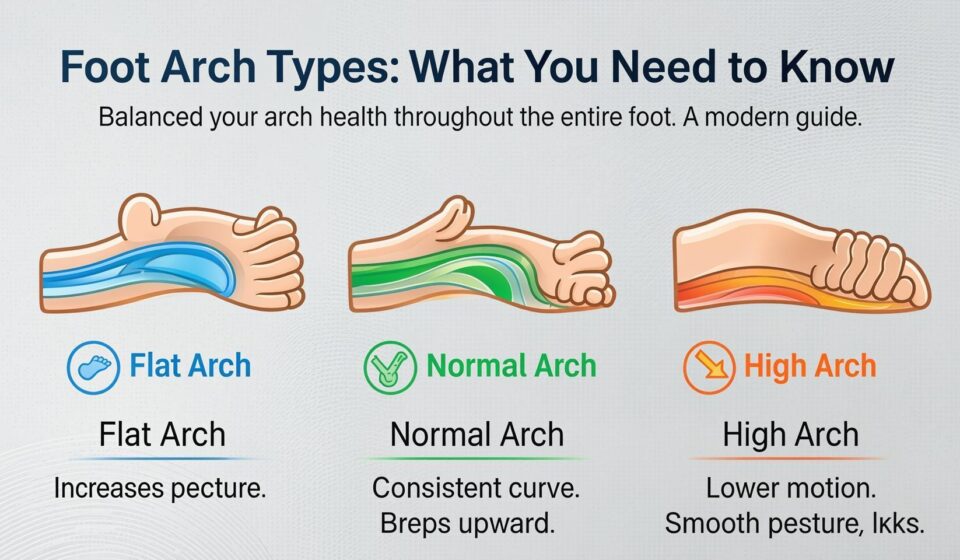
Determining your foot arch type is essential, as it can significantly affect your choice of footwear and overall foot health. Generally, there are three main types of foot arches: high arches, normal arches, and flat feet. Knowing which category you fall into can help guide your decisions regarding shoes and foot care.
How to Determine Your Arch Type
Identifying your foot arch type is important for selecting the right footwear. While professional foot scans are available, there are simple tests you can perform at home. Here are a few effective methods to help you figure out your arch type:
The Wet Test
The wet test is a straightforward home method to assess your arch type. Gather a shallow basin, clean water, and a piece of thick paper. Follow these steps:
- Fill the shallow basin with a thin layer of water.
- Wet the sole of one foot by placing it in the water.
- Step onto the heavy paper and lift your foot off.
- Examine the imprint left on the paper.
The pattern you see will help indicate your arch type.
The Wear Test
Another effective way to determine your arch type is by examining the wear pattern on an old pair of shoes. Here’s how to interpret the signs:
- If the wear is concentrated on the inside near your big toe, you may have flat feet or be a pronator.
- If the wear is uniform across the middle of the sole, you probably have normal arches.
- If the outside edge of the shoe shows significant wear, you could be a supinator, indicating high arches.
Observation from the Side
This simple test involves observing your arch's height from the side. You can do this by standing on one foot and looking at your arch, or you can ask someone to assess your foot's profile.
- A flat arch suggests pronation.
- A higher arch indicates supination.
- A “neutral” arch is characterized by a gap under your arch that can comfortably fit a finger.
Consult a Podiatric Physician
For a conclusive diagnosis, visiting a podiatric physician is highly recommended. These professionals conduct detailed assessments to not only identify your foot arch type but also pinpoint any related issues. A foot examination can help highlight problems often overlooked, like alignment issues or potential injuries. Podiatric physicians can also recommend appropriate footwear based on your specific needs.
This post contains affiliate links. If you make a purchase through my links, I may receive a small commission at no additional cost to you. I only recommend products I truly believe in.
The Different Types of Foot Arches
Understanding the various foot arch types can help you appreciate the diversity in human anatomy. Each foot type has its advantages and disadvantages. Here’s a closer look:
Medium Arches
Medium arches, also known as neutral arches, are the most common, affecting roughly 60% of the global population. If you have medium arches, you'll likely find that your feet require minimal support, making alignment of your hips, knees, and ankles easier. However, neglecting foot care over time can lead to problems like collapse of the arches, especially as you age. To maintain healthy feet, consider using insoles specifically designed for medium arches.
Low Arches
Low arches, or flat feet, occur when your foot is nearly or fully flat against the ground. This foot type is prevalent among around 20% of people. While flexible, low arches can lead to biomechanical imbalances and a host of potential issues, including:
- Plantar fasciitis
- Heel and arch pain
- Over-pronation
Regular visits to a podiatric physician can help manage these risks. Here are some proactive measures for maintaining foot health:
- Opt for supportive footwear designed for flat feet.
- Consider using custom foot orthotics for better support.
- If you experience severe discomfort, surgical options are available to realign your foot.
High Arches
High arches, known medically as cavus foot, occur when the arch of your foot is highly pronounced. Roughly 20% of the population has high arches, and although many individuals may not experience pain, it can lead to complications over time. Those with high arches tend to supinate, placing extra pressure on the forefoot and heel. This may result in problems such as:
- Heel pain syndrome
- Arch strain
- Calluses and claw toes
To manage the effects of high arches, consider the following strategies:
- Seek guidance from a podiatric physician for treatment options.
- Choose shoes specifically designed for high arches.
- Utilize orthotics to provide additional cushioning and alignment.
The Importance of Knowing Your Foot Type
Understanding your foot type is not just about comfort; it plays a crucial role in overall foot health. When shopping for shoes, your arch type is as significant as your shoe size. Properly fitted shoes tailored to your foot's unique architecture can alleviate discomfort and significantly reduce the risk of injuries.
Wearing the wrong type of footwear can lead to various health issues, including:
- Hammertoes
- Calluses
- Blisters
- Inflammation
- Plantar fasciitis
- Ingrown toenails
Being aware of your foot type allows you to make informed choices about footwear, ensuring your feet remain happy and healthy.
Tips for Foot Care Based on Arch Type
Regardless of your foot arch type, some general practices can aid in maintaining foot health:
1. Regular Foot Checks
Make it a habit to monitor your feet frequently. Scanning your feet every few years can help catch potential issues early.
2. Foot Hygiene
Proper foot hygiene is essential for preventing infections. Keep your feet clean and dry, and ensure you regularly trim your toenails.
3. Choose Appropriate Footwear
Investing in the right shoes can significantly enhance comfort and support. Always choose footwear suited to your specific arch type, whether that's high arches, flat feet, or neutral.
4. Use Orthotics
Consider using orthotics or insoles if you experience discomfort or have specific foot conditions. Custom orthotics can provide tailored support to alleviate pain and enhance alignment.
5. Stay Active
Maintaining an active lifestyle can keep your feet in good shape. However, if you start to feel any discomfort during physical activities, it’s crucial to take breaks and reassess what footwear you are using.
Conclusion
Regular foot assessments are crucial not just for identifying your foot arch type but also for spotting any underlying health concerns. When purchasing shoes, always take into account your size, weight, activity level, and of course, your arch type. By paying attention to these factors, you can enhance your overall foot health, promote comfort, and prevent future issues.
Prioritize your feet by understanding their needs and ensuring that you choose appropriate footwear that accommodates your unique arch type and lifestyle.