
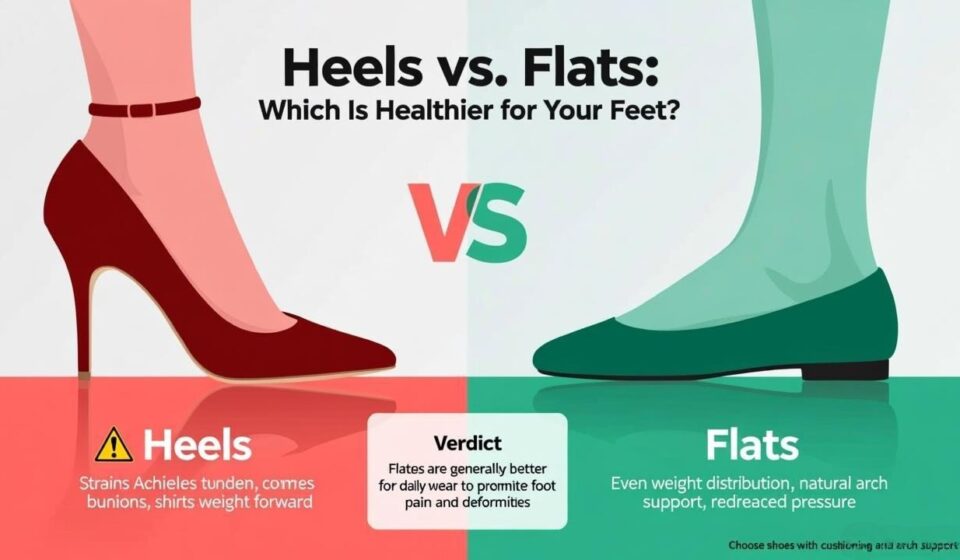
Heels vs. Flats: Which Is Healthier for Your Feet?
Heels vs. Flats: Which Is Healthier for Your Feet?
For centuries, shoes have transcended their basic function of protecting our feet; they have become symbols of style, status, and personal identity. When it comes to footwear, two categories consistently vie for attention: the chic high heel and the practical flat. While both styles offer unique aesthetic benefits, an important question looms for those mindful of their long-term foot health: Which option is genuinely better for your feet?
This might appear to be a straightforward question, yet the reality is far more complex than a simple “heels are bad, flats are good.” Each option has its advantages and drawbacks. Understanding these can empower you to make more informed choices for the health of your feet.
The Allure of High Heels
High heels have a magnetic charm. They elongate the legs, enhance posture (or at least create the illusion of it), and elevate any outfit to a new level of sophistication. From soaring stilettos to more forgiving wedges, heels have captured the imagination of fashion enthusiasts throughout the ages.
The Drawbacks: Fashion at a Cost
However, the glamour of high heels often comes with a steep physiological price. Wearing them shifts your body weight forward, creating significant pressure on your forefoot and toes. This unnatural alignment can trigger a domino effect of foot-related issues, including:
- Foot Pain: The most immediate concern. Increased pressure and muscle strain are frequent complaints among regular high-heel wearers.
- Bunions and Hammertoes: The cramped design of many heels forces toes into an unnatural position, contributing to the formation of bunions (bony growths at the base of the big toe) and hammertoes (a condition that causes toes to bend downward).
- Achilles Tendon Problems: Long-term high heel use can shorten and tighten the Achilles tendon, making the transition to flats painful and potentially leading to conditions such as Achilles tendinitis or even ruptures.
- Back and Posture Complications: The forward tilt necessitated by heels can lead to excessive arching of the lower back, straining the lumbar spine and potentially resulting in chronic back pain.
- Ankle Instability: The height and narrow base of heels increase the risk of ankle sprains, making wearing heels a risky endeavor.
- Knee Pressure: The altered walking pattern associated with heels places undue stress on knee joints.
The Comfort of Flats
Flats often receive praise as the healthier alternative. They allow your feet to maintain a natural alignment, distributing weight more evenly across the foot. From ballet flats and sneakers to loafers and sandals, their versatility and purported comfort make them a popular choice.
The Hidden Drawbacks: Not All Flats Are Created Equal
While flats may be more foot-friendly than heels, not every flat shoe is designed with your foot health in mind. The assumption that all flats are inherently good can be misleading. Here are some common issues associated with unsupported flats:
- Insufficient Arch Support: Many flat styles, such as ballet flats and inexpensive sandals, offer little to no arch support. This lack can lead to over-pronation (excessive inward rolling of the foot) and strain the plantar fascia, possibly resulting in:
- Plantar Fasciitis: A debilitating condition often characterized by sharp heel pain, especially after sitting or sleeping.
- Arch Strain: Chronic discomfort in the arch of the foot.
- Inadequate Cushioning: Thin-soled flats provide minimal shock absorption. This can lead to:
- Shin Splints: Pain that runs along the shin bone.
- Knee and Hip Discomfort: Increased impact can exacerbate issues in these areas.
- Stress Fractures: Particularly in active individuals, these can occur due to repetitive impact.
- Stability Issues: Many flimsy flats offer little to no lateral support, risking foot sliding or twisting inside the shoe.
- Vulnerability to the Elements: Open-toed flats expose your foot to potential cuts, scrapes, and infections, especially in bustling urban environments.
The Verdict: A Balanced Approach
So, what is the healthier choice? It’s not merely a matter of selecting one option over the other. Both heels and unsupportive flats can pose risks to your long-term foot health. The ideal footwear strikes a balance: it supports your feet’s natural structure, provides adequate cushioning, and evenly distributes pressure without forcing your feet into uncomfortable positions.
Finding Your Foot's Happy Medium
The objective isn’t to eliminate heels or flats from your wardrobe but to make informed decisions that prioritize foot health. Here are some strategies to find your ideal footwear balance:
Alternate Your Footwear
Variety is key. Refrain from wearing the same type of shoe every day. If you enjoy heels, save them for special occasions rather than daily commutes. Rotate between supportive options like flats or low-heeled shoes.
Choose Wisely
For Heels
- Opt for lower, wider heels (2 inches or less) with a roomy toe box.
- Consider wedge or block heels, which typically offer more stability compared to stilettos.
For Flats
- Look for options featuring good arch support, ample cushioning, and a thicker, more supportive sole.
- Many stylish sneakers and loafers are now designed with ergonomic features for enhanced comfort.
Consider Insoles or Orthotics
If your favorite shoes lack adequate support, high-quality insoles or custom orthotics can significantly improve comfort and provide the necessary arch support.
Stretch Regularly
If you frequently wear heels, make it a habit to stretch your calf muscles and Achilles tendon. This practice can alleviate the tightness caused by high heel wear.
Listen to Your Body
Never ignore foot pain; it’s your body’s way of signaling a problem. If discomfort persists, consult a podiatrist for professional advice.
Prioritize Function Over Fashion (Sometimes)
Although fashion can be fun, remember that your feet are your foundation. Invest in high-quality, supportive shoes for daily wear, reserving more challenging styles for occasions where they truly matter.
The Long-Term Impact on Your Feet
While both high heels and flats have their unique appeal, the long-term impact on your feet should not be taken lightly. Ignoring foot health can lead to chronic issues, affecting not just your feet but your overall well-being.
The Importance of Foot Care
Taking care of your feet goes beyond choosing the right footwear; it also involves proper foot care. Regularly inspect your feet for any signs of discomfort, blisters, or other concerns. The healthier you keep your feet, the more robust and resilient they become.
The Role of Footwear in Your Lifestyle
Your lifestyle plays a crucial role in your footwear choices. If you lead an active lifestyle, your shoes should support your activities. Selecting appropriate footwear based on your needs can prevent injuries and keep your feet happy.
Conclusion
The dialogue surrounding heels and flats goes beyond a simple comparison. The footwear we select can greatly influence our foot health. Both styles have their drawbacks when worn excessively or chosen carelessly. To achieve optimal foot health, the key lies in moderation, thoughtful choices, and a commitment to support your feet properly.
Your feet bear the weight of your life, so treat them well, making informed decisions that prioritize their health and comfort!
This post contains affiliate links. If you make a purchase through my links, I may receive a small commission at no additional cost to you. I only recommend products I truly believe in.