
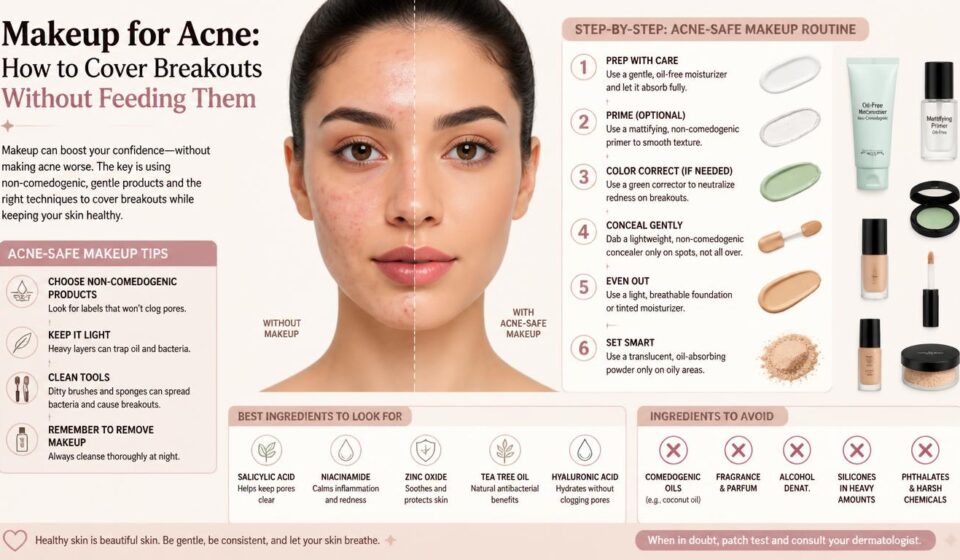
Makeup for Acne: How to Cover Breakouts Without Feeding Them
You know the drill. A pimple shows up right before something important, you reach for concealer, and somehow, a few days later, there's a whole new cluster of them keeping the first one company. If that sounds painfully familiar, chances are your makeup routine might be part of the problem rather than the solution. The good news? It doesn't take a total overhaul to fix, just a smarter approach to picking makeup for acne that actually works with your skin instead of against it.
This isn't another list of “just use less product” advice, either. We're getting into the actual ingredients that matter, the application habits that quietly wreck your skin, and a few product categories worth adding to your cart. Grab a coffee, this one's worth reading slowly.
Why Some Makeup Turns Against Acne-Prone Skin
Here's the thing nobody tells you at the makeup counter: not all foundation is created equal, and some of it is basically pore-clogging in a pretty bottle. Heavy oils, certain waxes, and thick silicones can trap sebum, dead skin, and bacteria right where they don't belong, which is exactly the recipe for a new breakout. It's not that makeup is inherently bad for acne-prone skin, it's that a lot of formulas simply weren't built with breakout-prone skin in mind.
Then there's the fragrance issue. A lot of drugstore and even high-end products throw synthetic fragrance into the mix for a nicer smell, but for already-inflamed skin, that fragrance can be an irritant hiding in plain sight. Combine an irritating fragrance with a pore-clogging base, and you've got a formula working double-time against your skin. Once you start reading labels with this in mind, it becomes a lot easier to spot trouble before it ends up on your face.
The Ingredient Duo Worth Looking For
If there's one ingredient pairing that keeps showing up in dermatologist recommendations, it's salicylic acid and niacinamide. Niacinamide is a well-known antioxidant with anti-inflammatory and barrier-boosting properties, which basically means it calms your skin down while it works. Salicylic acid, on the other hand, is a beta hydroxy acid that's oil-soluble, so it can actually get down into the pore itself rather than just sitting on the surface.
Together, this pair tackles acne from a few angles at once. Niacinamide helps reduce surface shine while salicylic acid penetrates pores and helps regulate oil production, and salicylic acid also clears the clogged pores that trigger breakouts in the first place. That's a lot of work for two ingredients, and it's a big part of why you'll see them show up together in newer makeup formulas, not just skincare.
Products with either of these built in can genuinely double as light skincare while you're wearing them. That said, they're not miracle workers on their own, and pairing them with an otherwise pore-friendly base is what makes the real difference.
Foundation, Concealer, and Powder Picks Worth Trying
Foundation is usually where people get stuck, since there's an overwhelming number of options claiming to be “acne-safe.” A few categories genuinely deliver, though. Mineral foundations tend to be a safe bet since their core ingredients don't feed bacteria the way some synthetic fillers can. Lightweight liquid foundations with a matte or natural finish are another solid choice, especially ones labeled oil-free.
- Shop oil-free foundation options on Amazon
- Browse salicylic acid infused makeup on Amazon
- Check out mineral setting powders on Amazon
Concealer gets a special mention here too, mostly because it's the product most likely to sit directly on an active breakout. A thin, buildable formula beats a thick, cakey one every time, and if it includes niacinamide or salicylic acid, even better, since you're essentially treating the spot while covering it. Setting powder rounds things out nicely, keeping oil in check throughout the day without adding another heavy layer on top of everything else.
Application Habits That Are Quietly Sabotaging You
Even the best product in the world can't save you from bad application habits, and a few of these are more common than you'd think. Dirty brushes and sponges are probably the biggest offender, since they collect oil, dead skin, and bacteria every single time you use them. If you can't remember the last time you washed your beauty blender, that's probably your answer right there.
Another sneaky habit is skipping sunscreen underneath your makeup. Sun exposure can darken post-acne marks and make them stick around a lot longer than they otherwise would, so tossing on an SPF before foundation is a small step that pays off later. And touching your face throughout the day to fix your makeup? That's basically transferring bacteria straight from your hands to your pores, over and over.
- Wash brushes and sponges at least once a week, more often if you're breaking out.
- Apply sunscreen before foundation, not instead of it.
- Keep your hands off your face once your makeup is set.
- Remove makeup fully before bed, no matter how tired you are.
- Replace products past their expiration date, even if there's product left.
Building a Routine Without Overwhelming Your Skin
One mistake a lot of people make is trying to fix everything at once. New foundation, new primer, new setting spray, all in the same week, and then no way to tell which one is actually helping or hurting. A better approach is introducing one new product at a time and giving your skin a week or two to react before adding the next piece.
It's also worth paying attention to timing. Hormonal shifts, weather changes, and even stress can all affect how your skin responds to the exact same products you've used for months without issue. If a formula that's always worked suddenly starts causing trouble, it's not always the product's fault, sometimes it's just your skin going through something else entirely. Keeping that in mind can save you from unnecessarily blaming (and tossing) a perfectly good foundation.
Frequently Asked Questions
Is it bad to wear makeup every day if I have acne-prone skin? Not inherently, as long as you're choosing non-comedogenic, oil-free formulas and cleansing properly at the end of the day. The real risk comes from heavy, pore-clogging products worn daily without a proper cleanse.
Can salicylic acid in makeup actually treat acne, or is it just marketing? It can genuinely help! Salicylic acid is oil-soluble, which lets it work its way into the pore rather than sitting on the surface, so a makeup product with it isn't purely cosmetic.
How long should I test a new makeup product before deciding if it's safe for my skin? Give it at least two weeks. Breakouts from a new product don't always show up immediately, so a few days of clear skin isn't a guarantee.
Should I switch my entire routine if I have a bad breakout? Not right away. Swap one product at a time so you can actually pinpoint the cause instead of guessing your way through a total overhaul.
Is powder foundation better than liquid for acne-prone skin? It depends on your skin. Powder tends to control oil better, while liquid offers more coverage. Some people do well combining a light liquid base with a powder to set.
Ingredients Worth Avoiding Altogether
While we've covered what to look for, it's just as useful to know what to steer clear of. Coconut oil is a big one, and it's a bit of a plot twist since it gets marketed as this wholesome, natural miracle ingredient everywhere else. On acne-prone skin, though, it's actually one of the more pore-clogging oils out there, so it's worth double-checking ingredient lists even on “clean beauty” products.
Denatured alcohol is another one to watch for. It can strip your skin's natural moisture and leave it dry and irritated, which sounds harmless until you realize dry, irritated skin often overproduces oil to compensate, kicking off a whole new cycle of breakouts. Heavy synthetic fragrance rounds out the list, since it's a common trigger for allergic reactions and irritation, especially on skin that's already inflamed from active acne.
Where Skincare and Makeup Start to Overlap
It used to be that makeup and skincare lived in totally separate categories, but that line has blurred a lot in recent years. More brands are formulating foundations, concealers, and even setting sprays with active ingredients that used to only show up in serums. That's honestly great news for anyone with acne-prone skin, since it means your makeup routine can quietly support your skincare goals instead of working against them.
That said, it's worth remembering that makeup with active ingredients isn't a replacement for an actual skincare routine. Think of it as a bonus layer rather than the main event. You'll still want a proper cleanser, treatment products, and sunscreen doing the heavy lifting underneath, with your makeup simply adding a little extra support on top.
Final Thoughts
Finding makeup for acne that actually works with your skin isn't about luck, it's about knowing what to look for and paying attention to how your skin responds along the way. Once you start reading labels for pore-clogging culprits and swap in a few dermatologist-favored ingredients, the whole process gets a lot less like guesswork.
Give your skin some patience while you adjust things. It won't happen overnight, but a few thoughtful swaps now can save you a lot of frustration, and a lot of concealer, down the road. And if you're ever unsure whether a flare-up is coming from your makeup or something else entirely, a quick chat with a dermatologist can save you weeks of trial and error.